life between the pages

“I spent my life folded between the pages of books.
In the absence of human relationships I formed bonds with paper characters. I lived love and loss through stories threaded in history; I experienced adolescence by association. My world is one interwoven web of words, stringing limb to limb, bone to sinew, thoughts and images all together. I am a being comprised of letters, a character created by sentences, a figment of imagination formed through fiction.”
Tahereh Mafi, Shatter Me
Showing posts with label vagabonds and wayfarers all. Show all posts

Tuesday, December 02, 2025

Book Review: Crudo, by Olivia Laing


Oof.

Two things. Two things you have to know about this book, before you get very far into it:
1. Kathy is dead. She never saw 2017, she died in the 90s.
2. Kathy wrote a lot of prose using cut-outs from other people's works. There is an index in the back of the book, it contains pertinent references from Kathy's, and other people's, actual writings. It helps if you look at it from time to time.

Kathy Acker was a punk poet, an author of stream of consciousness observations and diatribes about what was and longing for what could have been, but usually was not. To reimagine her writing in response to Twitter feeds and everyday occurrences and uncommon stupidity like the Trump presidency and Brexit is simply brilliant. But you have to know what youre getting into, you cant be ignorant of this woman and try to wend your way thru this book. It just won't work.

That said, the book is brilliant. It's raw and edgy, sure, but it also glitters with almost tactile vibrancy.

"Just let me learn that love is more than me."

"But all the distances had grown in the last year. The feeling of foreignness blew around the carriage. She liked the man, she smiled at him as they left. You make divisions between people, countries, races, and out of the gaps the warheads emerge."

So many times during this short, half-day read one must lay the work down, close one's eyes, and just breathe. Remembering, how 2017 was so long ago, and we thought it so hard, so strange, so downright *wrong.*

And yet, we knew nothing. We had no idea of the horrible ride we were in for.

But Kathy knew. Like Van Gogh, she says: he knew. And so did she.

Ghostlike, wraithlike, bright shadows on the wall of her home, she moves down the hall of that confused, painful time, cracking wise ass asides, drunk, self-medicated, missing nothing.

And she reminds us of her time, the 80s, and earlier, when people knew things were bad, when AIDS and the threat of nuclear war permeated everyone's consciousness, and as horrifying as things were then we had no idea how bad things would eventually be. The genius of Laing in using Acker's voice and style of writing about the first Trump year is breathtaking. It leaves me mostly wordless, it is impossible to say anything adequate to the purpose.

"I who would have and would be a pirate: I cannot. I who live in my mind which is my imagination as everything -- wanderer adventurer fighter Commander-in-Chief of Allied Forces -- I am nothing in these times."

"Love is the world, pain is the world."

Ah, I cannot.

Originally posted at The StoryGraph

Monday, October 20, 2025

Book Review: North Country, by Matt Bondurant

Phenomenal read. Matt Bondurant (full disclosure - a wide swath of my family tree lies in Franklin County and includes Bondurants, so he's likely a third or fourth cousin) has taken the torch flung by Ron Rash, Lee Smith, and Charles Frazier, and carried it aloft into the literary stratosphere.

There is a way to write gritty, human-centered prose without the grit and gore overtaking the message, so the reader feels the character's experience without the story becoming lost. It's a delicate balance that can elude even the most accomplished writers. Bondurant brings the reader directly into the tale without losing focus, without the distraction of overly descriptive passages that can derail a carefully constructed momentum. And yet, you feel the cold, slicing wind off the Lake and the enveloping, suffocating shock of frigid water, the subliminal thrill of anticipation, the yearning disturbance of complicated sexual desires; the dearth of hope in the miasma of poverty that strangles some of the neighborhoods near the local prison, and the livid disgust of some of the people who have to live there.

Each chapter limns the world of the small, cold border town of North Chazy from the perspective of one or more of its residents in a way that we know is leading toward something horrifying, and yet we live with each of these people in a way that feels real and authentic and causes the reader to lay bets on who will survive, and who will be indelibly changed by the experience - for good or ill. I especially appreciated the ability of the author to give his characters resilience in the form of empathy or knowledge where one doesn't expect it - as in Phil's self-discovery about his relationship with his baby daughter Juliet, as with the strongman Kaiser's almost obsessive affinity for science, with the sorority women's sisterhood that watches for other women in danger and their neatly orchestrated plan for lifting them gently out of it.

Honestly grateful for the opportunity to read this incredible story, thanks to Netgalley and the publisher in exchange for a review. Five-plus stars, and the hope that Matt Bondurant will keep writing, keep storytelling, keep traveling the route of the human mind and its history, and bring those things to light and life on the page.

Tuesday, September 16, 2025

a dry retribution


he hears the wind ruffling the pines,
soaring up the mountainside
tossing the chickens over the fence
and into the dog's breakfast.

cock and hen alike had always
clucked cheekily between the roughened boards,
refusing to share even a daily ovum,
quibbling merrily over the the latest bug.

fateful diligence spared them not
and it came to pass, in an instant,
that they were merrily consumed
by all who knew them.

and on and on and on
said she, skipping through the grass
skirts lifting, apron cupped and
running smack into bedlam

where she sees the fine sharp
teeth glinting in the sunlight
with the damply clinging feathers of
gold, and white, and green

she whirls, in the swing of time
upward shrieking in a slice of sky
and the errant muddy fiend's appetite
is gone forever, leaving only a trace

of rheumy fleabitten cowering
faintly shadowed by the fall,
into the ready and vacant dust beside
an angry, sodden puff of red-encrusted white.


Image source: Reijo Telaranta, Pixabay

Tuesday, June 17, 2025

Book review: Splendid Liberators

My god, what a history, sorely needed at a time like this.
In carefully, explicitly documented detail, the author lays out the horrifying, inexorable journey the American government took to Imperialist conquest of people who were seen by a white-centric public as lesser, undeserving of equitable freedoms or self-determination and stripping human dignity and life itself from tens of thousands of people. All in the name of “saving “ them from Spanish colonialism, the US blasted its way across Cuba, Puerto Rico, and the Philippines in a blood-spattered cloud of corruption and hubris. This history is still not well taught in American schools, but it is a history well known to those whose countries were permanently altered by it.
Like Suzy Hanson’s Pulitzer-finalist “Notes on a Foreign Country,” Jackson’s “Splendid Liberators” reveals with exquisite clarity why the United States is rightfully hated by much of the world. We need to know and understand this history. Without these stories, we Americans will continue to wither in ignorance on the vine of history, and deservedly so. The sickening truth is part of us, and illustrates our deep, carnal debt to those we have conquered in the name of democracy, but in truth were merely living flesh to feed our capitalist hunger, justified by an ethnocentric eugenicist ideology that stripped the humanity from those whose lands we lusted after, whose natural resources and strategic locations we coveted. Nothing more.
Thanks to NetGalley and the publisher Farrar, Straus, and Giroux, for a free copy of the pre-release text in exchange for an honest review. I will be purchasing copies of this book for several friends and family members, because it is that important.

Friday, April 05, 2024

The Legend of Billie Jean's Heartfelt Brilliance: A Retrospective

I found this gem that can be watched for free on the YouTubes: The Legend of Billie Jean

Now, if you haven't watched this movie recently, or heaven forbid you never heard of this movie, run, don't walk, and WATCH IT RIGHT NOW.

This movie has aged incredibly well. In the day, I don't think certain people took it seriously. But if you were a traumatized young woman, and there were a lot more of us than perhaps people realize - Billie Jean was like a bolt of lightning. She shone like a gilded arrow soaring straight into the heart of the patriarchy. And we loved her for it.

The first five minutes of the movie are like a cold water bath in lost memory: the skinny clothes, the easy acceptance of poverty, the sweat, the feel of the wind in your hair on the back of a speeding open two-wheeled vehicle. I'd forgotten none of us wore bras. I'd forgotten we used to run around half-naked because there was no such thing as central air-conditioning. I'd forgotten how much of life we spent outside. (Would you have stayed inside those brown-paneled, dimly-lit, cigarette-smoke-filled, claustrophobic rooms? Me neither.) I also forgot just how inundated we were with sexual harassment that crossed physical boundaries, and how little equipped we were as young women and girls to deal with it. But it's there, right there, in all its obtuse ugliness.

This movie was one of the most realistic depictions of what life was like for people like me who grew up in the South in the 1970s in cinema - right up there with Virgin Suicides. Some people missed that. I read somewhere that "girls wouldn't have cut their hair like that just to be like her. That's unrealistic and made the movie seem [more trite etc etc]." Of course this was written by a male. And tell that to the thousands of people who watched the movie and then went straight into their bathrooms and cut off their own locks. Like I did. I hadn't had short hair for nearly a decade at that point, but something about BJ's shorn head called out to my recently bereaved soul: I had given a baby up for adoption, and almost no one knew how much I still grieved, nearly two years after the fact. Cutting my hair defiantly in the mirror did lead me to a beautician's chair to clean up the mess I'd made but the gesture meant something. Not for nothing did people in past centuries shave their heads when something awful happened. There's something purifying about this act, a ritual casting out of inner demons, a denial to the world that "everything's all right."

Sometimes everything is absolutely not all right, and this is one way to get people to pay attention and look a bit closer. Sometimes it's the only way to signal things are not all right. Sometimes we don't have words. Sometimes we just feel compelled to do something physically to ourselves, and we may not even know why, but it's a call we absolutely must answer. It's more than a "new look;" we're ready to step into a new identity, and take on the world.

Brava, lady. You go.


A reviewer took issue with Billie Jean's response to the 14-year old Putter's beginning of her period. The writer clearly completely misunderstood Billie Jean's advice to "lie down and take it easy" as "fear"?! Nothing of the kind. Unlike many depictions of this event in cinema both before and since that reflects the negativity about it more common in the real world, Billie Jean celebrated Putter's getting her period. "That's wonderful!" she crowed, and promptly took Putter to the dock for a ceremonial (and practical) bath, wrapping her tenderly in a big towel. When she said, "Lie down and take it easy," it was a way of saying, "Job well done! You've earned some well-deserved rest after that crazy thing we all just went through that you handled amazingly well." There was not a trace of fear in any of their responses. To think otherwise shows how little that reviewer was paying attention.

Paying attention is exactly what Billie Jean was doing. The things that happened to her and to her brother caused her to stop, pause, and consider carefully a most human and reasonable response. She shrugged off the violence that had been done to her own person (and god did that feel familiar); she just wanted the people who were responsible for wrecking her brother's scooter to pay for the repairs. It was that simple. She didn't ask them for respect, or admission of guilt. She just wanted her brother to have his scooter back in working order. But in so doing, she forced people to look at themselves and consider their actions. To recognize they had done wrong. And unfortunately, when some people do that, they lash out at the messenger: in this case, Billie Jean and her friends who supported her.

Sound familiar?

Some people have learned nothing in the nearly 40 (!) years since this movie was released. That damn film was ahead of its time; its themes of social justice, anarchic movements, and anti-capitalism seemed pragmatic and real at the time. After all, "Fair is fair!" And the fuckers eventually got what was coming to them. It's almost eerie how the youth as depicted in this movie instantly got the message that Billie Jean was sending. Surely these were lessons the world was learning. Right? Right?! ... Then again the whole damn 80s were a tease that things would be better and life was going to make more sense in the coming years. But not all of us were evolving. Not everyone wanted fairness and freedom and happiness. We underestimated the sheer tenacity and meanness of the patriarchy, unfortunately.

At the end of the movie, Billie Jean and her brother are taking off for long-talked-of Vermont. Christian Slater's character notices a red snowmobile that quite obviously reminds him of his lost Honda Elite, and he stops to admire it, proving that in spite of their troubles, his interest in fast and shiny things hasn't been destroyed. Billie Jean has her eyes on the road. She seems to hope things are going to be all right, but there's a wariness, a hard-won wisdom that she wears like a veil. She's beautiful and strong and represents all things good. But she's alone, except for a younger person she'll have to watch over and keep out of trouble. She's every single-mother and older-sister out there. One wonders where Lloyd is, what their parting was like. One hopes Putter and Ophelia are okay. But we don't know. All we can do is hope.

Plus ça change, plus c'est la même chose. (attributed to Jean-Baptiste Alphonse 1808–1890 French novelist and editor)

References:
Remembering Legend of Billie Jean: The First Great Female Superhero Movie
28 Things We Learned from the Legend of Billie Jean Commentary
44 Facts About the Movie The Legend of Billie Jean
Cult Classic Legend of Billie Jean Still Relevant Today
Wikipedia entry "The Legend of Billie Jean"

Thursday, January 04, 2024

Book Review: The Salt Bairns, by Cynthia Tidrick

The Salt BairnsThe Salt Bairns by Cynthia Tidrick
My rating: 5 of 5 stars

I was fortunate to receive an advance copy of THE SALT BAIRNS and have to say, it was one of the most meaningful and insightful fiction reads I've been privileged to find in a very long time. Cynthia Tidrick has constructed a magical world, full of shadows and vice, and yet the colors and characters within the narrative surround each other and the protagonist with genuine feeling and knowledge. The reader cannot help but become swallowed up in their world, traveling onward in a rich and memorable adventure as the story unfolds. The author's unusual turns of phrase are yet clear and so beautiful, with atmospheric descriptions that enable the reader to grasp deeper meaning and understanding of the many layers in this tale. Skillful and sometimes shocking illustrations add to the fantastical quasi-realism of the work. Five glorious stars.

*Thank you to the Author for the advance read copy.

View all my reviews

Wednesday, November 18, 2015

the anarchy of nature

A forward shift in time and possibility ...eglantine - the sweetbrier rose - with graceful blushes lets us know that fall approaches, celebrating the last burnished notes of summer

...and in like manner, willow heralds the spring with effusive yet subtle gestures in palest green.

In the fall, the summer birches shed their green for pumpkin, burgundy, rich yellows, molten gold. They stand, godlike, unaware and unheeding of our passing.

In November the world is setting the stage for sleep, to rest awhile before the cycle begins again. The promise of delicious, rose-colored fruit glistens in the midst of soft rain, held aloft on greenbriar branches, steady and peaceful. In the quiet you can feel the gentle pinpricks of preparation, feel the heartbeat of movement that carries us, blissful, through the coldest months until the rising sap presses up the stems and new life bursts upon us once again.

Wishing you a restful winter, and a joyous awakening in the months to come.

Tuesday, January 13, 2015

winter, warm and humble

Then came old January wrapped well in many weeds to keep the cold away
Edmund Spenser, The Faerie Queene


Cold weather tends to bring out the hibernation in some of us. I happen to subscribe to this tendency, and do not apologize. Nothing seems more apt when the wind howls at the door than to curl up with a good book, snuggled deep in the blankets, the better to doze when the inclination takes us.


“I sit beside the fire and think
Of all that I have seen
Of meadow flowers and butterflies
In summers that have been

Of yellow leaves and gossamer
In autumns that there were
With morning mist and silver sun
And wind upon my hair

I sit beside the fire and think
Of how the world will be
When winter comes without a spring
That I shall ever see

For still there are so many things
That I have never seen
In every wood in every spring
There is a different green

I sit beside the fire and think
Of people long ago
And people that will see a world
That I shall never know

But all the while I sit and think
Of times there were before
I listen for returning feet
And voices at the door”

J. R. R. Tolkien, The Fellowship of the Ring 


Friday, September 12, 2014

the anarchy of dreams


Links I am reading while my mind cogitates:

http://main.nc.us/books/books.cgi?thecominganarchy-shatteringthedreamsofthepostcoldwar

https://www.goodreads.com/book/show/33691.The_Coming_Anarchy

https://www.nytimes.com/books/first/k/kaplan-anarchy.html

http://www.blueanarchy.org/celestial/


http://www.awesomeyourlife.com/2012/03/love-anarchy-are-what-keep-your-dreams-high-stakes-and-thrilling/

http://cvilleanarchism.wordpress.com/

http://www.anarchistnews.org/

http://www.huffingtonpost.com/2009/08/03/krugman-if-you-arent-outr_n_249813.html

http://www.dailykos.com/story/2006/05/23/212822/-If-you-aren-t-angry-you-aren-t-paying-attention

http://theamericanscholar.org/every-last-one/

http://www.akpress.org/

http://theanarchistlibrary.org/

http://anarchyisforeveryone.blogspot.com/2008/06/call-for-submissions-anarchism-and.html

http://en.wikipedia.org/wiki/The_Masque_of_Anarchy  /  https://ia600309.us.archive.org/23/items/masqueofanarchyp00shelrich/masqueofanarchyp00shelrich.pdf

http://www.acorncommunity.org/

Hope: http://en.wikipedia.org/wiki/Hope

The Principle of Hope:  http://en.wikipedia.org/wiki/The_Principle_of_Hope

http://en.wikipedia.org/wiki/The_Revolt_of_Islam


Tuesday, February 11, 2014

How Far We've Come, To Fall So Far

There is simply no excuse for the fact that well into middle age, with advanced degrees, a respectable middle-class income, and a credit history over 20 years long, that my husband and I are still patently unable to purchase a house, and each month we struggle to meet the bills for basic needs such as food, fuel, shelter, clothing, and education.

Consider this: My parents, who were young professionals with no credit background to speak of and a two-year old, on October 16, 1963 purchased the home that my mother still lives in. At the time they were both teaching school, with advanced degrees and a respectable middle class income. This home was about five years old and cost $17,000.00 (slightly less than the average price of a new home in the US at the time as recorded by the US Census), and was paid off at the tidy sum of $103.00 per month, principal and interest, well before the time of my father's death in 1988. The property is valued at around $125,000 today; it is a 2/3-acre lot with a 4 BR/1.5 bath home in excellent condition and still located in a respectable neighborhood. My mother also has excellent health insurance and pension benefits and will never have to worry about how she will pay for basic needs such as food, shelter, clothing, eyeglasses, and medical care. She never has and she never will. She's a classic example of someone who worked hard, paid her bills and was able to put something away each month for the future. She pays cash for a brand new vehicle about once every eight years or so because she has an abhorrence of paying interest that can not be deducted from one's tax bill. She has lived a tidy, respectable life, and has earned her comfortable retirement.

The Bureau of Labor Statistics has this handy-dandy little table that details teachers' salaries for the period 1959-2006, with comparable 2006 constant dollars that make it simple to see these salaries' equivalents in 2006 dollars. You will see, for instance, that though my parents jointly earned about $12,000 (my mother taught elementary and my father taught high school), the equivalent salary in 2006 dollars was about $80,000. This was because the cost of housing, fuel, automobiles, education, groceries, clothing, etc. - i.e., the cost of living - was considerably lower then than today.

It's quite shocking, in fact, to look over the chart and see how the value of middle-class salaries fell into the toilet during the ensuing years.

To be perfectly sure we're comparing apples to apples, my mother & father paid about $900 annually for taxes, insurance, and social security, making their effective joint disposable income about $11,100 (including obligations of 3.625% for FICA/SSec, 22.6% less exemptions & deductions for federal taxes, and 2% for Virginia state income tax). Their employers actually contributed to Virginia's retirement system and paid for their health insurance. Employees did not have to contribute at all until shortly before my mother retired in the 1990s. A pension and health insurance were considered part of one's compensation package - those were the days! However, during this period, all of the amounts deducted for FICA and Social Security came from an employee's paycheck; employers did not contribute to those programs at that time. There is a nice table at the Social Security administration's website that details federally mandated deductions for taxes and FICA starting in 1937. Historic federal tax rates are here, and you can peruse the actual 1040 and 1040a forms and instructions used to file back in 1963 at the IRS website. Historical state tax rates are contained within tables in this report.

So - let's compare: my husband and I just happen to jointly earn about $80,000 annually as professionals working in the non-profit and government sectors, from which about $20,000 is deducted in order to pay for medical insurance, withdrawals for retirement and deferred compensation of which our employers pay minuscule matches of less than 15%, and taxes, effectively making our joint disposable income in the neighborhood of $60,000. (Bankrate has a nice calculator to help you determine if adjusting payroll deductions might be a good idea in case you'd like to compare your own).

The problem begins to become apparent.

Take a look at my parents' joint disposable income of $11,100.00 in 1963 transferred to today's dollars in this handy-dandy little table:

[Note: Current data from this source is only available till 2012.] In 2012, the relative worth of $11,100.00 US from 1963 is:

  • $83,200.00 using the Consumer Price Index
  • $64,300.00 using the GDP deflator
  • $93,500.00 using the value of consumer bundle
  • $90,500.00 using the unskilled wage
  • $106,000.00 using the Production Worker Compensation
  • $170,000.00 using the nominal GDP per capita
  • $282,000.00 using the relative share of GDP
  • Put another way, if you want to compare the value of $11,100.00 worth of disposable income in 1963 with what it's worth in 2012 the relative:
    ...historic standard of living value of that income or wealth is $83,200.00
    ...contemporary standard of living value of that income or wealth is $93,500.00
    ...economic status value of that income or wealth is $170,000.00
    ...economic power value of that income or wealth is $282,000.00
    By any measure, our parents were wealthier by far than we can even hope to be, given today's economic realities. Thank you, banks, insurance companies, corporate welfare queens, and politicians. You've made it such a pleasure to be living and working today, working just as hard but making a fraction of what our parents did. Good show.

    See also US Census Historical Income Tables

    Measuring Worth

    1963 Enterprise Statistics

    Taxfoundation.org

    Bankrate.com

    SSA.GOV

    IRS.GOV

    University of North Texas Library

    ~

    Sunday, April 08, 2012

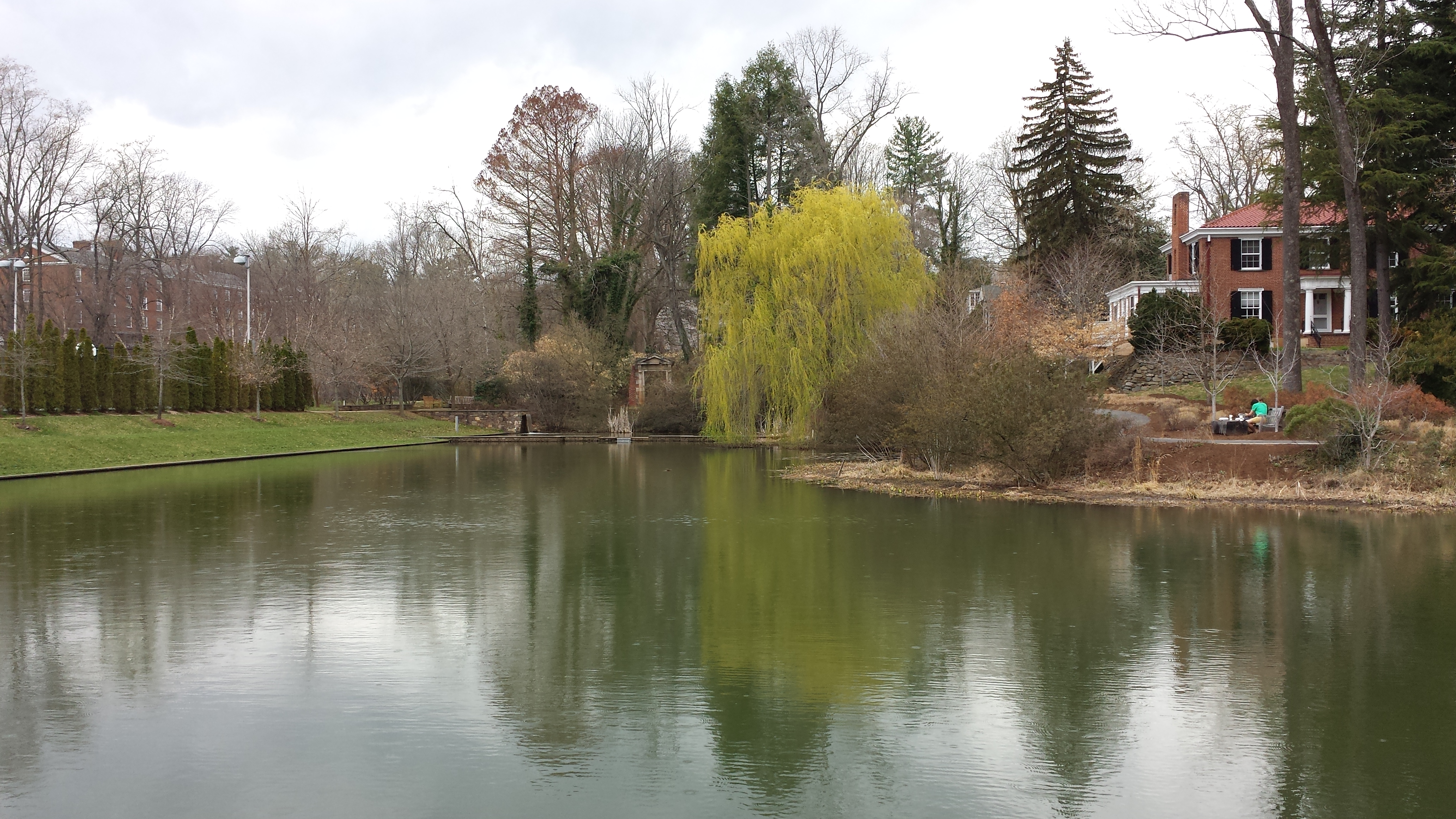
    The Greening of the Willow

    Willows Lit Up by the Sun, Shishkin
    So many things come bubbling up this time of year - and for some reason we seem to want to share them all, with someone, anyone, anywhere.  As the sap rises, so does the mind, so does the blood.  We feel a warm breeze, the air is scented with freshly mown grass, we hear birds twittering on the fencepost, we see the sky blue as paint and studded with wisps of cloud; we point and say, "Look, over there. Do you see it too?"  And we are happy for no particular reason. Like Lorraine DiSabato of Hoarded Ordinaries writes, "the simple experience of awareness, communication, and connection is enough."

    Suddenly we believe in the simple act of renewal and rebirth.  We are reminded that nothing is forever lost, evidence is all around proving the point.  Indeed, our senses are assaulted with proof.

    We move in and out of doors, laundering and airing out linens, boxing up winter's woolens, sweeping out the cobwebs from the corners. Baskets of ripe fruit appear in the markets, our nostrils twitch at the smell of baking bread. We sink our fingers into the warm, pliant earth, crumble in a few seeds, pat the soil back in place, and wait for the soft spring rains to come. New calves stagger after their mothers grazing in the meadows; Venus glows with luminous allure in the heavens of early evening.

    Use up the last of winter's baking supplies with these easy cookies. Perfect with slowly steeped green tea perfumed with honey and a small dish of frozen yogurt.

    Winter Begone Bars

    3/4 stick butter, softened
    1 tsp. vanilla
    1 tbsp molasses
    1 1/2 c. sugars - you can mix white, brown, and confectioner's sugars if you like
    1 egg
    1 c whole or lo-fat milk

    Cream together thoroughly in medium bowl and set aside.

    1 1/4 c. whole, rolled oats
    1 1/2 c. unbleached flour
    1 tsp. baking powder
    1/2 tsp. baking soda
    1/2 tsp. salt
    1/3 c. chopped nuts (walnuts, pecans, almonds or variety)
    1/2 c. Ghiardelli chocolate chips
    1/3 c. flaked coconut
    1/3 c. whole raisins, currants, cranberries (or a mixture)

    Combine dry ingredients in order in large bowl, mixing thoroughly after each addition.
    Add butter-sugar mixture to large bowl, stir well to mix.

    Pour into greased 13x9x2-inch glass pan.  Bake 35-40 minutes at 350 degrees F until done.  Cut into 2" squares.

    Variation:  For an alternative taste, reduce milk to 1/2 cup, omit chocolate chips and add 3/4 c. canned pumpkin and pumpkin seeds or sunflower seeds to batter.


    Sunday, June 26, 2011

    Love is Not Love


    Let me not to the marriage of true minds
    Admit impediments.  Love is not love
    Which alters when it alteration finds,
    Or bends with the remover to remove:
    O no! it is an ever-fixed mark
    That looks on tempests and is never shaken;
    It is the star to every wandering bark,
    Whose worth's unknown, although his height be taken.
    Love's not Time's fool, though rosy lips and cheeks
    Within his bending sickle's compass come:
    Love alters not with his brief hours and weeks,
    But bears it out even to the edge of doom.
       If this be error and upon me proved,
       I never writ, nor no man ever loved. 

    --Shakespeare, Sonnet 116

    'Nuf said.  Carry on.

    Saturday, May 07, 2011

    barefoot on the earth


    Go placidly amidst the noise and haste, and remember what peace there may be in silence. --Desiderata


    "It all seemed to good to be true.  Hither and thither he rambled busily, along the hedgerows, among the copses, finding everywhere birds building, flowers budding, leaves thrusting --everything happy, progressive, and occupied. ...He thought his happiness was complete..."  --Kenneth Grahame, The Wind in the Willows

    In Romancing the Ordinary, Sarah ban Breathnach reminds us of the spiritual connection that may be made in the simple act of removing one's shoes and walking about with our feet "'in touch' with the sacred."  It shames me to admit I worry when my children run about barefoot because I worry too much about cuts and scrapes.  Naturally they ignore me; I'm glad, for as much as I adore shoes, I prefer the feel of my toes on the bare hardwood floors of my home and the coolness of the grass beneath them as I'm hanging out the laundry.

    We never touch but at points.  --Emerson 

    Physical touch literally reconnects us with what matters.  When we are feeling scattered and stretched too thin, finding something tactile beneath our feet is calming and helps us to find our ground, so to speak.  Remove your shoes and whether inside or out, and walk about your Universe, so that your soul learns not to fear its weakness, by grasping the strength to be found in the Sphere:  small, humble, silent affirmations that touch you.

    Sunday, September 13, 2009

    Carry On

    “Finish each day and be done with it. You have done what you could. Some blunders and absurdities no doubt crept in, forget them as soon as you can. Tomorrow is a new day, you shall begin it well and serenely...” --Emerson