life between the pages

“I spent my life folded between the pages of books.
In the absence of human relationships I formed bonds with paper characters. I lived love and loss through stories threaded in history; I experienced adolescence by association. My world is one interwoven web of words, stringing limb to limb, bone to sinew, thoughts and images all together. I am a being comprised of letters, a character created by sentences, a figment of imagination formed through fiction.”
Tahereh Mafi, Shatter Me
Showing posts with label simple. Show all posts

Sunday, August 16, 2015

Sweet, Sweet Sunday

Sunday is a day of rest, goes the old adage, and I do subscribe to it. But today I'm making jam with plums my aunt, uncle, cousin, and I picked last Sunday afternoon from the ancient tree in my yard. I also hung out a load of laundry earlier, a ritual I crave for its simplicity and tactile pleasure.

It isn't work if you love it and it relaxes, reaffirms you. No, I truly believe it's part of the dance of the good life.


Together we picked 25 pounds of fruit last weekend. My aunt usually makes a simple jam based on an old USDA recipe. The wonderful thing about fresh-picked damsons is, in spite of the fact that they are a clingstone fruit, there is usually very little waste. From the entire batch I only found three plums I had to discard due to blemishes or rot. They are sturdy and simple to clean; the stems usually pop right off without tugging.


Here's my recipe for the jam, or rather preserves since I don't grind up all the pulp and fruit skin in a blender and it uses less sugar. I like the texture of the simple combination of fruit in its own rich nectar, and the slow simmering preserves the most flavour:

Damson Plum Preserves

10 lbs fresh plums, washed & picked
3 c water
6 c organic cane sugar

Place plums and water in large dutch oven, cover, and heat slowly at medium temperature, stirring occasionally to prevent sticking. When the mixture boils, set timer for 30 minutes. Keep covered and reduce heat to medium-low, stirring occasionally. Stir with wooden spoon and press lightly to encourage splitting of the pulp, which will make the pits easier to remove later. Reduce heat if necessary to keep from boiling over, and continue simmering for an additional 20 minutes.


When the mixture has cooked thoroughly for at least an hour, pulp has absorbed the dark red coloring of the mixture and the liquid has reduced slightly, turn off and set aside half-covered for about an hour until it is cool enough to touch. Stir lightly and pour mixture through a sieve into a large plastic or glass bowl, pressing to get as much pulp as possible to separate from the pits. Stir and return to dutch oven; set mixture aside.


Working over a second clean bowl, carefully remove pits from the remainder of the mixture in the sieve and discard them. When the remainder has been picked clean of pits, return it to the rest of the mixture and combine with sugar. Stir thoroughly.

Place mixture back in heavy saucepan or dutch oven, cover, and heat slowly to boiling a second time. Be careful not to heat too quickly or scorching can occur. Cook carefully over medium- to medium-low temperature until mixture reaches 220 degrees. This may take an hour, more or less. Boil for ten minutes until jell stage is reached. Remove from heat and allow to cool slightly, checking for thickening.

Pour into hot, clean jars, seal, and process in water bath canner for 10 minutes. Alternately, I am told you can skip the processing if your jars have been boiled and sterilized. A friend does it this way:
... when I do jelly and jam I try to take the jars out of hot water or dishwasher and fill with boiling jam. Then put on lids and invert on counter for five minutes and then turn right side up and wait for ping. I don't use a canner for jelly or jam as the product is hot and sterile, the jar is hot and sterile, and the lids are hot and sterile and they seal nicely. Never lost a jar this way, only in pressure canner.
While the jam is cooling, go check the laundry. Stretch your arms up high. Breathe in the goodness.

Images and content copyright (c) 2015 Susannah Eanes. All rights reserved.

Monday, May 25, 2015

The Five Basics of a Healthy Diet

Often, people ask me if I might help them shop for groceries. It seems that they believe I must know some secret for making quick and efficient work of this chore.

Well, perhaps I do.

Over 20 years ago I was diagnosed with systemic lupus erythematosus, or SLE - commonly referred to as just "lupus." Through trial and error I found a few keys to making life easier. One of these was a diet based on these five basic ideas:

1. Simple
2. Fresh
3. Local
4. Organic
5. Varied

You can remember them by looking at your hand, where it just so happens that there are five fingers - one for each basic idea.

Cool, huh?

These five keys do simplify grocery shopping, meal planning, and food preparation a great deal. Choices that aren't so good for you are immediately eliminated by keeping them in mind.

Each key can be further described as follows:

Simple
In its most basic terms, simple means as few ingredients as possible. It is the first tenet of a basic lifestyle and diet. For instance, when you take a look at the ingredient list printed on a container of food - a loaf of bread, a can of soup, a box of cereal, you should be able to cover it lengthwise with one finger. If a few words or lines of text peek out below that finger, put it back. It isn't simple. Too many ingredients mean food additives and things that aren't really food. You don't need that stuff in your life.
Simple means basic, plain vegetables, fruits, meats, and grains. You can combine them in your kitchen. If you decide to purchase something someone else has made, keep that simple rule in mind. Their list of ingredients shouldn't be any longer than it would be if you'd made it yourself.

Fresh
Not canned, frozen, pickled, dried, or otherwise preserved. Eat predominantly fresh foods every day. Use preserved foods sparingly. Preserving food is sometimes necessary, but be mindful that it introduces extra ingredients (see "simple") such as salt, flavorings, sugar, and other things you don't want too much of. If you want to preserve foods you can do it yourself. Make your own jams, bread, yogurt, chili beans, pizza, cookies, meat loaf, pudding. You'll know what's in it, and you don't have to worry about things you can't pronounce cluttering up your intestines and causing all sorts of unpleasantness.

Local
The closer something is to your table, the less likely it is to have additives and other questionable unpleasantness like extra sugar, salt, and preservatives. Local means the farmer just outside of town, the dairy up the road, catfish from the river. If you're eating foods from your neighborhood you're going to be more aware of things that might affect your health. Local means fresh, simple, and varied. Local also means fewer environmental impacts in getting that food to you. And that's always a bargain.

Organic
One day, we'll all eat this way. Pesticides, herbicides, feedlots and unnecessary pharmaceuticals in our foods cost more and drive up the cost of production. Don't reward bad behavior. Remember, eating organic means you're putting less questionable things in your body. It's better for the earth -- better for our streams, soils, and the air we breathe. But do your research - make sure the company behind the label is reputable and isn't just "greenwashing."

Varied
If we go by what's in season not only will we be eating the freshest, healthiest food, but we're assured of a constantly changing variety. Sure, you may go on a binge and want to eat peanut butter for lunch three days in a row, or a week's worth of salads, but normally you won't want to press it beyond that. A varied diet means plenty of choices in color and texture; it means meats and potatoes, soups and sandwiches, nuts, fruits and cheeses. It means raw and cooked, bland and spicy. Use herbs, vinegars, piquant vegetables, peppery spices and creamy milks to add interest and nutrition when you prepare meals. Variety also means don't do it all yourself. Ask for help - children and those who might not normally be found in the kitchen will enjoy meals they helped bring to fruition.


A few final thoughts - 
Given a choice between an organic vegetable shipped across the country and a local but conventional one - choose the local. Many local farms actually use a minimum of artificial pesticides and additives, but haven't been certified because of the cost of the labeling. Bottom line - know where your food comes from. Make sure the actual cost of the food is reflected in your choices. "Cheap" is rarely better, and almost always doesn't take into account the cost to the earth or society. Which means - we'll be paying for it in the long run.

Good food is like medicine. It's an investment in your health. Choose wisely, and you'll reap the rewards of your wisdom!

Sunday, April 08, 2012

The Greening of the Willow

Willows Lit Up by the Sun, Shishkin
So many things come bubbling up this time of year - and for some reason we seem to want to share them all, with someone, anyone, anywhere.  As the sap rises, so does the mind, so does the blood.  We feel a warm breeze, the air is scented with freshly mown grass, we hear birds twittering on the fencepost, we see the sky blue as paint and studded with wisps of cloud; we point and say, "Look, over there. Do you see it too?"  And we are happy for no particular reason. Like Lorraine DiSabato of Hoarded Ordinaries writes, "the simple experience of awareness, communication, and connection is enough."

Suddenly we believe in the simple act of renewal and rebirth.  We are reminded that nothing is forever lost, evidence is all around proving the point.  Indeed, our senses are assaulted with proof.

We move in and out of doors, laundering and airing out linens, boxing up winter's woolens, sweeping out the cobwebs from the corners. Baskets of ripe fruit appear in the markets, our nostrils twitch at the smell of baking bread. We sink our fingers into the warm, pliant earth, crumble in a few seeds, pat the soil back in place, and wait for the soft spring rains to come. New calves stagger after their mothers grazing in the meadows; Venus glows with luminous allure in the heavens of early evening.

Use up the last of winter's baking supplies with these easy cookies. Perfect with slowly steeped green tea perfumed with honey and a small dish of frozen yogurt.

Winter Begone Bars

3/4 stick butter, softened
1 tsp. vanilla
1 tbsp molasses
1 1/2 c. sugars - you can mix white, brown, and confectioner's sugars if you like
1 egg
1 c whole or lo-fat milk

Cream together thoroughly in medium bowl and set aside.

1 1/4 c. whole, rolled oats
1 1/2 c. unbleached flour
1 tsp. baking powder
1/2 tsp. baking soda
1/2 tsp. salt
1/3 c. chopped nuts (walnuts, pecans, almonds or variety)
1/2 c. Ghiardelli chocolate chips
1/3 c. flaked coconut
1/3 c. whole raisins, currants, cranberries (or a mixture)

Combine dry ingredients in order in large bowl, mixing thoroughly after each addition.
Add butter-sugar mixture to large bowl, stir well to mix.

Pour into greased 13x9x2-inch glass pan.  Bake 35-40 minutes at 350 degrees F until done.  Cut into 2" squares.

Variation:  For an alternative taste, reduce milk to 1/2 cup, omit chocolate chips and add 3/4 c. canned pumpkin and pumpkin seeds or sunflower seeds to batter.


Sunday, June 26, 2011

Love is Not Love


Let me not to the marriage of true minds
Admit impediments.  Love is not love
Which alters when it alteration finds,
Or bends with the remover to remove:
O no! it is an ever-fixed mark
That looks on tempests and is never shaken;
It is the star to every wandering bark,
Whose worth's unknown, although his height be taken.
Love's not Time's fool, though rosy lips and cheeks
Within his bending sickle's compass come:
Love alters not with his brief hours and weeks,
But bears it out even to the edge of doom.
   If this be error and upon me proved,
   I never writ, nor no man ever loved. 

--Shakespeare, Sonnet 116

'Nuf said.  Carry on.

Saturday, May 07, 2011

barefoot on the earth


Go placidly amidst the noise and haste, and remember what peace there may be in silence. --Desiderata


"It all seemed to good to be true.  Hither and thither he rambled busily, along the hedgerows, among the copses, finding everywhere birds building, flowers budding, leaves thrusting --everything happy, progressive, and occupied. ...He thought his happiness was complete..."  --Kenneth Grahame, The Wind in the Willows

In Romancing the Ordinary, Sarah ban Breathnach reminds us of the spiritual connection that may be made in the simple act of removing one's shoes and walking about with our feet "'in touch' with the sacred."  It shames me to admit I worry when my children run about barefoot because I worry too much about cuts and scrapes.  Naturally they ignore me; I'm glad, for as much as I adore shoes, I prefer the feel of my toes on the bare hardwood floors of my home and the coolness of the grass beneath them as I'm hanging out the laundry.

We never touch but at points.  --Emerson 

Physical touch literally reconnects us with what matters.  When we are feeling scattered and stretched too thin, finding something tactile beneath our feet is calming and helps us to find our ground, so to speak.  Remove your shoes and whether inside or out, and walk about your Universe, so that your soul learns not to fear its weakness, by grasping the strength to be found in the Sphere:  small, humble, silent affirmations that touch you.

Tuesday, April 12, 2011

Comfort Food

Chardin, Grace Before a Meal
Looks like more rain is heading this way; the view outside is dank and drippy.  True to form I want to head to the kitchen to put something together that tastes good, is easy to prepare, and brings a satisfied warmth to the bellies in my house.

Here are a few of our favorites.

Bubble & Squeak
`Now, cheer up, Toad,' she said, coaxingly, on entering, `and sit up and dry your eyes and be a sensible animal. And do try and eat a bit of dinner. See, I've brought you some of mine, hot from the oven!'    

It was bubble-and-squeak, between two plates, and its fragrance filled the narrow cell. ..and Toad, between his sobs, sniffed and reflected, and gradually began to think new and inspiring thoughts: of chivalry, and poetry, and deeds still to be done; of broad meadows, and cattle browsing in them, raked by sun and wind; of kitchen-gardens, and straight herb-borders, and warm snap-dragon beset by bees; and of the comforting clink of dishes set down on the table at Toad Hall...   


Bubble and Squeak has a somewhat negligible reputation amongst foodies, which must be due to the fact that traditionally it was made up of leftover mashed potatoes and old cabbage boiled down in a pot to muculent ignominy.  We've made our version of delectably seasoned Virginia pork sausage, fresh cabbage, and new potatoes.  Quite the rainy day fare!

Take half a head of fresh green cabbage, wash thoroughly, and slice into 1/2" thick sections, chopping these in half again, and set aside in a bowl into which you've poured about 1 c. ice-cold water.  Wash and cube about 4 medium russet potatoes, leaving skins on, into pieces 3/4" - 1" in diameter.  Brown 1 lb. local sausage (Valleydale, Weinberg's, Neese's are all good choices, depending upon where you live) in a large skillet until down, lift out and let drain; pour off most of the sausage grease from pan, leaving crisp drippings.  Place the cubed potatoes in the skillet with 1 tbsp. unsalted butter and 1/4 c. water, cover and cook over medium low heat 15 minutes.  Add sausage and cabbage, layering over potatoes, cover again and steam about 10 more minutes just until cabbage is lightly done.  With spatula, lift and turn over the mixture to blend, cover tightly and remove from heat and let sit about 10 more minutes.  Serve with piping hot biscuits and butter or cornbread.  So good.


Shrimp & Grits
Nathalie Dupree, Charleston chef and former SC Senatorial candidate, has written an entire cookbook on this delectable concoctionBeing from Virginia, I'd never heard of it until I moved to South Carolina.  After my first bite I honestly wondered how I'd actually lived up to that point.  Never fails to lift my spirits, no matter how bummed I may be or how difficult the day has been.  Pure heaven defined in a china bowl.  Serve with green salad and hot tea.

Cook grits according to package directions using milk instead of water for a creamy consistency (Generally, measure 1-1/4 c. grits to about 4 c. milk, heat slowly on medium-low heat, add 1 tbsp. butter and 1 tsp. salt, stirring often until mixture is thoroughly cooked and thickened but not lumpy.  Keep covered.  Takes about 20-25 minutes). 
While grits are cooking, brown 3 - 4 slices fresh bacon on both sides, remove, drain, crumble, set aside, reserving pan drippings.  Add a bit of olive oil if necessary to make about 1/3 c. total in pan.  Wash, peel, de-vein about 1-1/4 lb. fresh medium-sized shrimp and remove tails.  Place shrimp in pan on medium heat, turning quickly but gently with spatula as the shrimp heat thoroughly, and as they are finishing, replace crumbled bacon in pan and lower heat.  Add a splash of white wine or apple juice, 1 tbsp fresh chives, 1 clove fresh minced garlic, fresh ground black pepper, dash tabasco or other flavorful hot pepper sauce to taste.  Cover and remove from heat, let this mixture sit for about 3-5 minutes so that the flavors continue to meld.  Serve up grits in large round cream soup dish with shrimp mixture ladled over the top.  Serves 4-5 admirably.


Bean & Bacon Soup

A childhood favorite.  Great with a grilled cheese sandwich and a nice dill pickle or two.  Using freshly dried herbs gives this a monumental flavor that will bring them back for second helpings every time.

1 lb. pkg. Navy or Great Northern Beans, washed & drained
1/2 lb. smoky sliced bacon strips, cooked according to package
2-3 medium carrots, peeled & chopped
1 small white or yellow onion, minced and cooked in bacon drippings until clear, drain and set aside
1 8 oz. can tomato paste
6-8 c. water
2 cloves garlic, peeled & minced
1/2 tsp ground sage
1/2 tsp ground thyme
1 tsp snipped rosemary
dash turmeric, ground black pepper, salt to taste

Cook beans according to package directions in large soup pot or dutch oven until tender.  Add cooked bacon, crumbled, along with about 2 tbsp pan drippings from bacon, and mix thoroughly to distribute.  Add carrots, cooked onion, tomato paste, water to desired consistency, and seasonings.  Cover and cook thoroughly on medium-low heat for about an hour.  Serves 10-12.

Sunday, January 09, 2011

Warm and Savory

No matter how you spend the months of winter, curled up by a warm fire with a book or engaged in brisk outside activities, it's hard to beat the universal appeal of homemade soup.  It's easy and so satisfying.  Feel free to experiment with whatever ingredients you have on hand; there are no hard and fast rules for soup and it's one of the best ways to use up leftover vegetables, rice, pasta, and roasted meats.

Winter Bean Soup
3 c. cold water
1 16-oz. package dried white beans or navy beans
1 med. butternut squash, peeled and diced into 1" chunks
1 onion, peeled & diced
1 clove of garlic, minced
1 tbsp. butter
3 1/2 cups chicken broth plus the meat from a roasted chicken
    (boil carcass to remove the bones from the meat, skim the fat)
1/2 tsp dried thyme leaves
1/2 tsp dried basil leaves
1 tsp. freshly ground black pepper
Sea salt to taste

Put water and beans into a dutch oven or crock pot, heat to boiling, then turn off and let sit for an hour.  Turn heat back up and cook beans until soft, adding water as needed to ensure beans do not dry out.  Add onion, garlic, butternut squash, chicken broth and chicken, cook on medium for a couple of hours.  When vegetables are soft and soup is of a good consistency, add herbs, salt and pepper, and simmer on low for another hour or so.  Serve with hearty bread and cheese or cornmeal muffins.


Soupe a la Reine
Never a fan of turnips, I was in a weird mood when I decided to try this... Said to be the favorite of Marie Antoinette, this recipe is adapted from one used in the artist Claude Monet's kitchen at Giverny, and two other 19th century recipes which mentioned the use of almonds in the broth.  It is positively decadently delicious, and should be placed right up there among the necessary indulgences with brie, ripe strawberries, and darkest, richest chocolate.

1 1/2 lbs. fresh turnips, washed, trimmed, and sliced
1/2 stick (4 tbsp.) unsalted butter
1 cup whole milk
1 cup sour cream (or substitute additional 1 c. whole milk, 1 tbsp butter, and 1/4 c. potato flakes)
1/2 cup almond milk (do not substitute soy milk, but skim milk or a bit of chicken broth would work)
1 tbsp. unbleached flour
Sea salt and pepper to taste

Cook turnips on medium heat in as little water as possible (no more than 3 to 4 cups but enough so that the turnips do not stick or scorch) until soft enough to mash with a fork.  Puree the turnips (or mash completely), add butter and continue heating on medium-low heat until butter is melted through the mixture.  Add milk and cream, stirring slowly until thickened slightly; small bubbles may appear at edge of pot, but do not boil.  Add flour to almond milk, salt, and pepper, whisk until completely dissolved, and add to soup mixture.  Heat thoroughly on low simmer.  Serve hot with table water crackers, tea, and fruit.

Sunday, September 13, 2009

Carry On

“Finish each day and be done with it. You have done what you could. Some blunders and absurdities no doubt crept in, forget them as soon as you can. Tomorrow is a new day, you shall begin it well and serenely...” --Emerson

Monday, July 25, 2005

A Testament for Simple Garments


Re-printed on request from my old website... Original Title: "A Testament for Simple, Historically-Based Modern Garments". And yes, it is too long, and I'll edit it mercilessly sooner or later.

“I hope some of you may be able to help me out here. First of all, I believe in dressing conservatively, and I am shall we say of a husky build. As you can imagine, I have a hard time finding conservative non-pants outfits that fit. Most commercial dresses don't fit me because I am about 6 sizes larger on top than on bottom. So needless to say I am resorting to making my own clothing. Can anyone suggest dress and shirt/skirt styles that are flattering to full figures? I have kind of an apple figure. I'm only 4 months postpartum and tend to still look pregnant in dresses. But I would like to find at least one alternative to the shirt and skirt look. Also, it would have to be nursing accessible. What fabric would wear well and not cling to every little flaw? Also, I had the pleasure of a conversation with an old order Mennonite woman. I asked her how they could stand to wear a dress and head covering in the summer, I get so hot in my dresses that I get sick and have to go inside. She told me that the key was in the fabric they use to make the dresses out of, which she did tell me, but I can't for the life of me remember what it was. Does anybody have any idea? Thanks for your help. Staci”

This plea was recently sent to a list to which I belong that is populated by people who wish to live simply and have a more tactile, self-reliant experience with daily life. The questions she asked are so deeply rooted in the everyday experience that a simple answer to the list could not possibly cover all that I have discovered in my 22 years in making garments, both historic and modern, for everyone from newborn premature infants weighing less than four pounds, to adults weighing in excess of 400 pounds. Your body is your business, its shape and features are entirely your business, and how you dress and move about is expressly your business. Still, sharing a little of my experience in dealing with nearly every body type could shorten a person’s search for what is right for him or her. To that end, I offer some of what I have learned here.
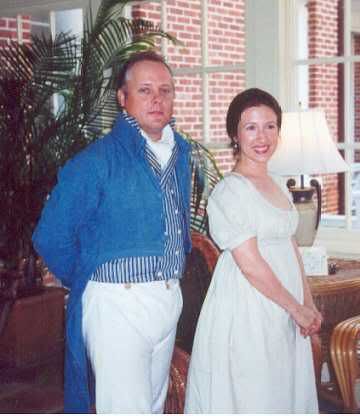
My background is this: I practice living history at several historic sites, and have done so for over 15 years. It still amuses me to hear folks come to sites and express instant outpourings of sympathy --entirely unnecessarily --for my having to wear such "hot and uncomfortable" attire. I instantly express the same outpouring of sympathy for them: saying such impertinent, but entirely truthful things like: "I am so much more comfortable in my skirts and petticoats than you in your tee-shirts and shorts or jeans! Indeed, I have built-in air conditioning, while you must bear with such clingy, uncomfortable and non-breathable clothing." Then people are astonished to discover I am corseted. "How awful!" they exclaim. "You must be positively stifling; how can you work in that thing?"


"Nonsense," I reply. "I assure you I am much more comfortable than you.” I smile, and they go on, wondering if I am crazy or merely misguided, and how much of this is part of the tour, anyhow? Therefore I do not add, but instead I keep the knowledge inside: Dresses and petticoats are quite possibly the most comfortable and healthful garments ever invented. Even men in other times, other cultures, wore them happily. I do not attempt to speak for the male experience, however, only the one I am familiar with: that of being female in a world where that feminity is lost, subdued, hushed up. I am quite sorry dresses and skirts fell out of fashion in favor of masculine-inspired wardrobes, but that is a social matter unto itself having to do with industrialization and the death of traditional lifeways that followed the First World War. I share the opinion of many social historians: that we are poorer for the loss, and in fact instead of being liberated from the fetters of Victorian social constraints, western civilization as a whole was robbed of our very feminity at this point in history. We merely traded one set of rules for another, equally rigid and binding. Some have gone so far as to say that the women of the 1920s were masquerading as the boys who had gone off to war, had never returned, and so could not contribute to the betterment of society. There is myriad evidence for this. One day we will figure out a way to rectify this imbalance, and feminine culture will again be acceptable without the appearance of subversion it has now. Now to say one prefers feminity is to say one advocates the subjection of our sex to that of the masculine. There is nothing further from the truth. Our sex has had to become the masculine, in order to survive."
But I digress, indeed that is a subject for another essay. Back to our subject: that of clothing simply and attractively!
Having dressed both in modern and past ways and performed daily chores doing so, true living historians can attest to several facts. Bear in mind that the recent "pioneer" type TV-reality shows were sensationalized and perpetuated many myths merely to make the experiences seem typically awful. Misery sells ads, people flock to see things they expect to be negative; if these people were happy, the general public would soon be bored, and the advertisers would not support the program. Suffice it to say, the true-life experience of our ancestors bears little resemblance to what we saw on these shows. Their real-life pleasures, dangers, distresses, and natural outcomes were not even a minimal part of these programs, despite claims to the contrary. But we will limit our discussion here to clothing. Also, dressing from the skin out in authentic historic garments is an entirely different experience than putting on a zip-back poly-cotton blend calico dress over modern undergarments, which is the usual practice of many historic sites that employ volunteer docents. The first is a pleasant experience, the second godawful.

FACT: It is entirely a misconception that our forebears "bore" the wearing of their clothing, including corsets and the attendant undergarments. Having worn such items daily for years, I can attest not only to their comfort but their practicality. Below I will list a few bits of advice that translate well to "modern" wardrobes. They may seem a bit odd at first, but believe me; they will go far in lessening the need for such absurdities as modern air conditioning and the Atkins Diet. My own frame of reference is, I live and work in the southern United States, where our summers are humid and hot, and our winters can be just as cold as those in Connecticut. A not-so-short list of basic rules follows, which I hope will be of some help in assessing your wardrobe and re-evaluating the decisions you make in deciding what to wear.


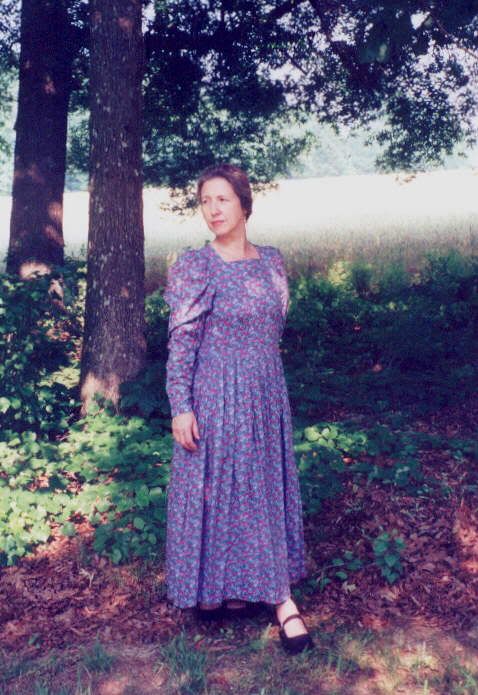
1. Pure natural fiber fabrics, including those in your undergarments, and excellent fit made to your measurements that are flattering to your body type are the keys. These are things over which you can exercise complete control if you make your own garments and/or purchase from natural fiber sources. 100% cottons, silks, linens, lightweight wools, rayons, or blends using a combination of these natural fibers are your best bets. Avoid blends containing polyester, nylon, elastic spandex, and acetates. These hold moisture and body heat and do not allow the body to breathe in order to regulate its own temperature. Some sources: WinterSilks, Garnet Hill, and the Vermont Country Store for natural undergarments with a minimum of terrible things such as spandex, nylon, underwires, and elastic. These materials are unhealthy and uncomfortable. Shun them in favor of brassieres, slips, tap pants, and camisoles made of natural silk, cotton, batiste, and irish linen, which last longer and are entirely better for you. Better yet, explore corsetry. This is entirely too large a subject to address here, you will have to do your own research. Suffice it to say a properly fitted corset or stays of natural cotton, either unboned, or boned with light steel or reed splint will alleviate back problems, provide better bust support, and allow your body to breathe the way it needs to, in addition to improving digestion and posture. I know some will be appalled and believe I am crazy to even suggest corsetry. Please do your own research and know that most of the "common knowledge" is actually myth, propagated by the fashion industry of the early 20th century, which harkened to the extremes of corsetry in the late 1870s & 1880s, and claimed medical validation based on these extremes. These extremes were not the rule, they were the exceptions, and were related to society’s loss of feminity referenced above.


2. STAND AND SIT UP STRAIGHT. This is the biggest difference between the fit of our clothing and that of our forebears. We slump, slouch, hunch over, and laze about, inhibiting our lung's ability to take in fresh air and our back's ability to carry the weight of our bodies. This major difference is the reason we can be fooled into thinking our ancestors over-corseted. They are actually standing up straight, when we think they are being forced to do so. This is entirely a myth. Good posture was once practiced everywhere; today, we hardly know the meaning of the word. EXERCISE, of course, is a fashion asset, and certainly includes dancing, running after the children, gardening, walking the dog, as well as your daily work: making beaten biscuits, hoisting firewood or a heavy cooking pot, tending the sheep, &c., &c., as long as it is undertaken with joy and strength of mind. What need had our ancestors of Atkins, when there was the joy of Friday night dances and work in abundance?

3. How do you know when your clothing really fits? Some questions to ask yourself:
a. Does it feel good? Does it look good? Do you smile when wearing it? Then it probably fits.
b. Does it gap open, fall unevenly, or slip about on your shoulders or hips? Then it probably doesn’t. Does it pull, bind, or pinch? Ditto. If you are unsure about an item, look in the mirror. Did you catch yourself in an unconscious frown? This can be a surprise; many times a garment that is beautiful on the hanger becomes a terrible sack or constricted cell when donned. Take it off; if it cannot be altered, donate or toss it out.


c. Look at the hemline. This is a very subtle thing, but if the hem does not hit you correctly, the entire line is thrown off. I have had to sigh and put away otherwise perfectly acceptable garments simply because they were too short and hit me at the wrong place on my knee or calf, but had too little hem to let out. Better that than the garment speak ill of you. A general rule is, the narrowest points on the leg are best. For short styles, this will be the narrow part of the knee, for very short styles (which I realize most of us do not wear, but for open-mindedness' sake), that would be the narrowest part of the thigh, before it widens out. For long styles, the narrow part of the leg just above the ankle, and for mid-length styles, that would be the narrow part where the shin-muscle joins the shinbone.
d. Assess the color. Color, in my opinion, is part of good fit. If a color is not flattering to you, it matters not whether the proportions are right, you will never look well in it. Discover your best colors and stick by them. Doing so will simplify your life greatly, and minimize the time you spend in shopping and building your wardrobe. There are entire books written on this subject, I will not attempt to repeat their wisdom here.
e. Assess your body type or style. Then learn what shapes balance that style, and stick by them. Like color, there are many available reference articles and books that include information about body type, go check them out. Basically they will offer typical classes based on shape –“apple” or round, “pear” or triangular, &c., &c. –and ways to make these body shapes appear more balanced. Assess your silhouette in the mirror, wearing a simple garment that fits well. Define your good points; assess your less-flattering ones by taking stock of what flatters you and what does not. If you have an "apple" shape, you may be more comfortable and look best in garments without definition at the natural waist. The raised waist, or no-waist silhouette such as we see in the princess-style, may make you happiest.
4. Assess your entire current wardrobe, keeping the basic rules of good posture, natural fabrics, and good fit in mind. Donate or throw out items that do not comply with these rules, unless they do have some hope of being re-made into something useful (such as toss-pillows from a skirt that has lovely fabric, a child's garment from something you can’t wear, or take the cast-offs to your sewing room if they may be made to fit you or someone else with adjustment or alteration).


5. KISS -- KEEP IT SIMPLE, SWEETIE. Simple does not mean boring, fake, or lazy. Simple means suitable for you in every way. Simple means if you discover something that suits you, then make or buy it in multiples. It is not the number of clothing items you have, but their suitability for you, that is important. Nothing unsuitable is ever simple, no matter what its claims for ease of care or good value. Simple does not mean baggy, boring or plain, it means the summation of suitability that includes good fit, good fabric, and good lines. While frills and silly details that detract from your natural confident beauty are obviously not what we are after, tasteful, interesting details such as collars, cuffs, or a great pin or set of earrings, certainly simplify your task in making the impression you want to make simply by limiting the length of time it takes to get dressed in the morning because you know it works. Along those lines: do you really need to wear makeup? Experiment with merely applying an excellent moisturizer on clean skin and drinking plenty of water, getting enough sleep, and eating the right foods. No makeup on earth has yet been invented that can adequately cover the lack of these, nor can add as much to your outlook and appearance as the right amount of each.
6. If you have decided to make or alter your own garments, start with a good assessment of your measurements vs. the ones on the commercial pattern you have chosen to make. Make sure you adjust the pattern wherever your measurements vary an inch or more from the pattern measurements. Choose your pattern size by the bust or hip measurement, whichever is larger, and wherever possible, combine sizes for the best fit. A class in fitting techniques is a wise investment: it is knowledge you will not outgrow, but build upon for the rest of your life.
7. Make your clothing well, with natural fiber linings, high-quality fastenings, an extra stitch or two for strength wherever you think of it. It will repay you many times over by lasting longer and fitting better than anything you can buy in a store. Good clothing can be re-made by changing the length of a hemline or sleeve, altering a neckline detail, &c., and thence give you twice or three times the wear. This technique is what allowed our ancestors to keep the same garments 10 to 20 years or more.
8. Higher waistlines --anywhere from 1 1/2" to 4" above the natural waist (which is 1" above the navel on all but the most long-waisted women), give several things: the illusion of height, a balance between bust & hip/stomach size, and the ability to move more freely. I recommend raising the waist on most modern dress patterns at least an inch to take advantage of these.
9. A light covering of sheer, natural material is cooler than bare skin, and also can insulate on cooler days. Try it, you'll see. Therefore, a head covering of Irish linen, sheer cotton lace, or silk will both keep you warmer on breezy days, and protect you from the sun's blazes on hot ones, as well as keeping your hair clean, out of your eyes, and protecting it from dulling ultraviolet light. A light shawl of fine wool or linen will also do the same for your neck & shoulders. And see? How graceful you suddenly feel, and appear!
10. Develop an appreciation for perspiration. It is the body's natural ability to regulate its own temperature. How did our forebears do it? They "sponged off," several times a day if need be, with clean water. They changed clothes two or three times a day, having garments for morning, afternoon, and evening, hanging up the old ones to air out and dry before putting them away, turning them inside out and hanging out in the sun or on the grass if they smelled. Sunshine and clorophyll kill bacteria. Spritz underarm areas with clear vodka to kill germs that cause odors. (OK, I know many of you will clamor "My great-grandmother had one dress for everyday and one for Sunday." That may be true, but it is an example of your great-grandmother's poverty, and was not the norm. I would wager that when Grannie was young she came into the house, took off that dress, and especially in summer did her hardest, messiest chores away from prying eyes because she was clad only in her linen shift and petticoat. Most folks had 3-4 well-made day outfits, 1-2 sets of work garments, and 1-2 for Sunday/visiting/special occasions, and changing & airing those garments as the heat of the day came and went was part of what made the garments last. But this, as other things I mentioned here, is an entire topic unto itself.)


Looking at the length of this message, I could write a book on the subject and probably should. It has been far too long that women have been stripped of both the comfort and feminity that is rightly theirs. No matter if you are short or tall, wide or narrow, it should be a simple matter to dress comfortably in garments that are flattering and tasteful. The ladies from whom we are descended had more natural experience, better choices, a more sharply defined sense of what was appropriate for their bodies, and hence a much better time of it in this regard than we do by far, with all of our so-called fashion “choices.”